
A Titanic Legacy: The F.M. Hoyt Estate
I have long known that my great-grandparents had resided in Marblehead, Massachusetts, a coastal town just north of Boston. I also learned that their home was settled on “the neck,” a peninsula that runs parallel to town, forming its scenic harbor. As I was unsure of the home's address, I set out to locate it. However, I did not anticipate the ties to the world’s most notorious maritime disaster I would uncover.
The 300-acre landmass comprising Marblehead Neck was originally home to the Naumkeag peoples. Permanent colonial settlement began when its first causeway was constructed in 1669, just south of town. In 1861, the heirs of Ephraim Brown, a farmer who owned a majority of the neck, began subdividing the peninsula, transforming it from a rural outpost to a favored vacation destination of Boston’s Gilded Age elite. By 1888, near the area's height, it held 95 summer “cottages”, three hotels, and two yacht clubs.
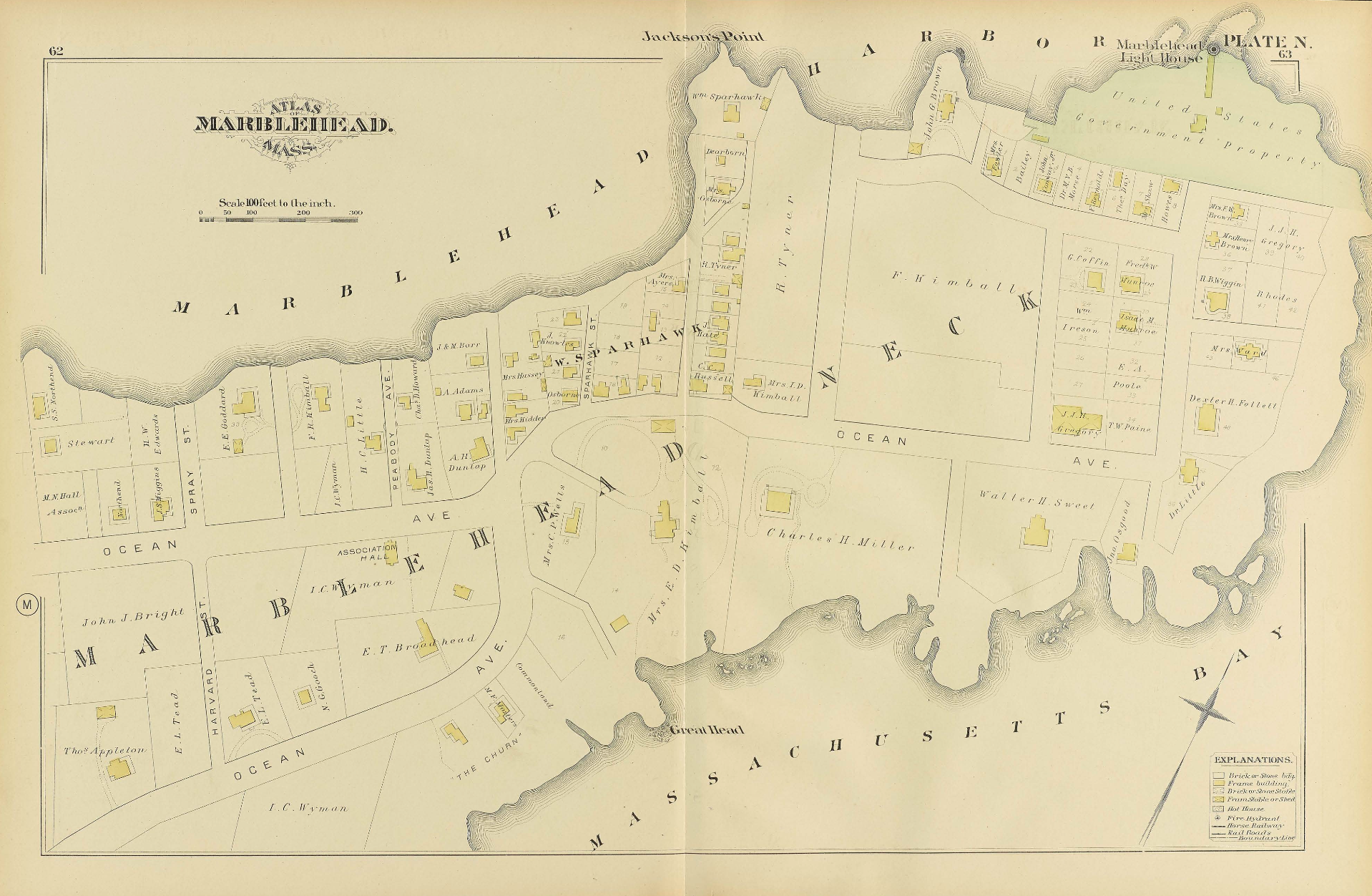
Hopkins, Griffith Morgan. Atlas of Marblehead, Massachusetts. Atlas. Philadelphia. 1881. State Library of Massachusetts, Real Estate Atlases. https://archives.lib.state.ma.us/entities/archivalmaterial/761fb8d1-62e0-4f84-9168-db314d6f5d91
I began by combing through old flight records, noticing a 1960 flight manifest from London to New York that listed my great-grandfather, an executive at Sylvania, as living at Ocean Ave, Marblehead. Yet the house number was absent in this record. Using Ocean Ave as a starting point, I located my great-great-grandmother's obituary, which detailed the residences of her sons. This led me to the realization that the omission in the flight manifest stemmed from the fact that, like many homes on Marblehead Neck at the time, the residence had no number, only a name: Seagard.

Chapman, Ida. Arthur Champan (My Great-Grandfather) Racing. Photograph. Houghton, Michigan, Late 1920s.
A perusal of old real estate listings led me to a 2006 advertisement that revealed Seagard stood at present-day 349 Ocean Avenue, although the property description indicated the current structure dated only to 1996. However, the home’s somewhat awkward placement on the lot, suggesting a prior subdivision of the surrounding land, and its rambling nature, indicating several additions over time, led me to suspect that the structure was much older.
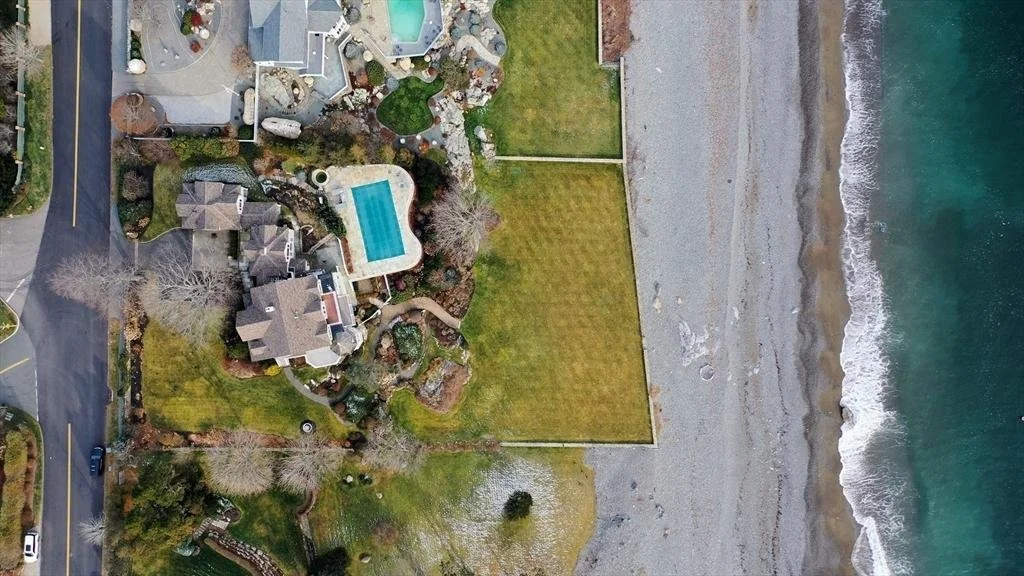
The Proper Nest Real Estate. 349 Ocean Ave Aerial View. Marblehead, Massachusetts, 2026.
The first clue I was on the right track was a 1962 land plan from my family's sale of the property. This showed the facades of the primary residence and former garage at the same odd angles as the current structures.
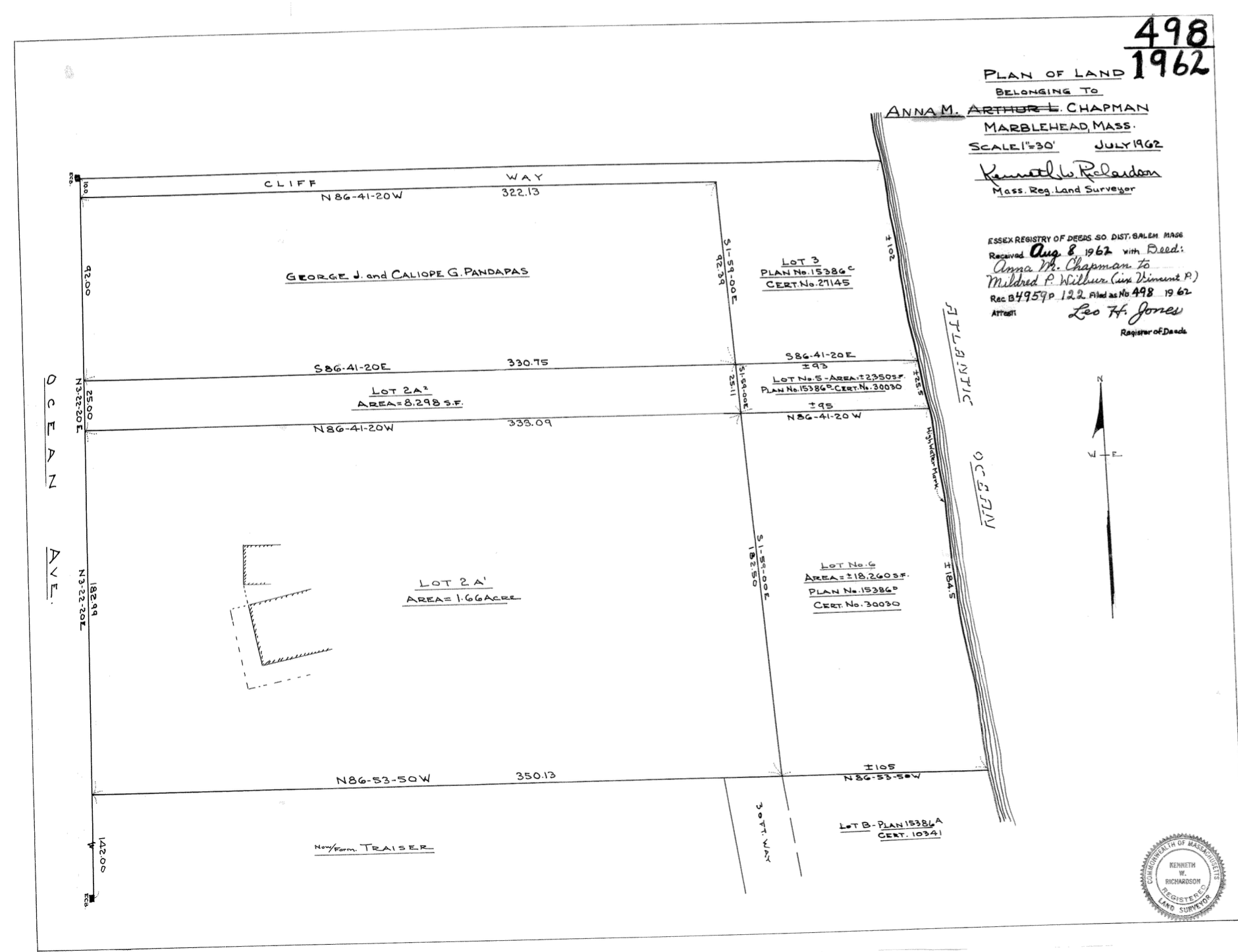
Richardson, Kenneth W. Plan of Land Belonging to Anna M. Chapman. Plat. Salem: Essex Registry of Deeds, 1962.
To orient myself throughout the following maps, I used the recently demolished Sky High, the former estate of felt manufacturer and race car driver herbet bowden, just north of Seagard, built in the 1890s. This allowed me to locate the home in question at the bottom of the following 1954 satellite photograph, further confirming the home's resemblance to the current structure.
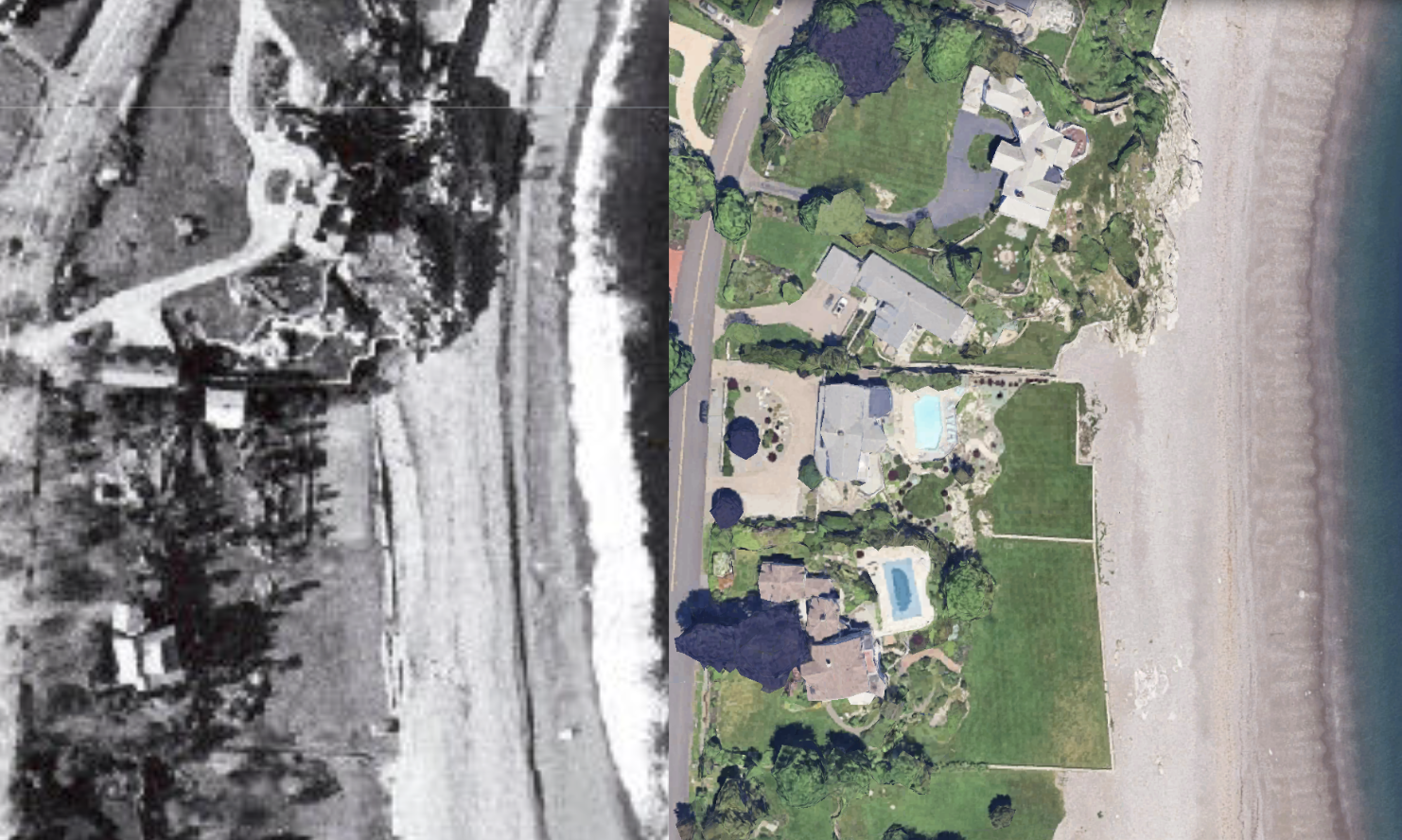
Marblehead in 1954. Satellite Image. 1954. Marblehead Historic Commission.
I then sought out the earliest Sandborn fire map of the area, circa 1915, on which the home immediately south of Sky High is labeled “Mirrmar” and ascribed to F.M. Hoyt. I recognized the name Hoyt immediately, as the family which traces its roots to the arrival of Englishman Simon Hoyt in 1630 is pervasive in the historical record of the northeast. In fact, there are well-known Hoyt estates throughout New York and New England, one of which, “The Point”, now abandoned, will be the subject of a later article.
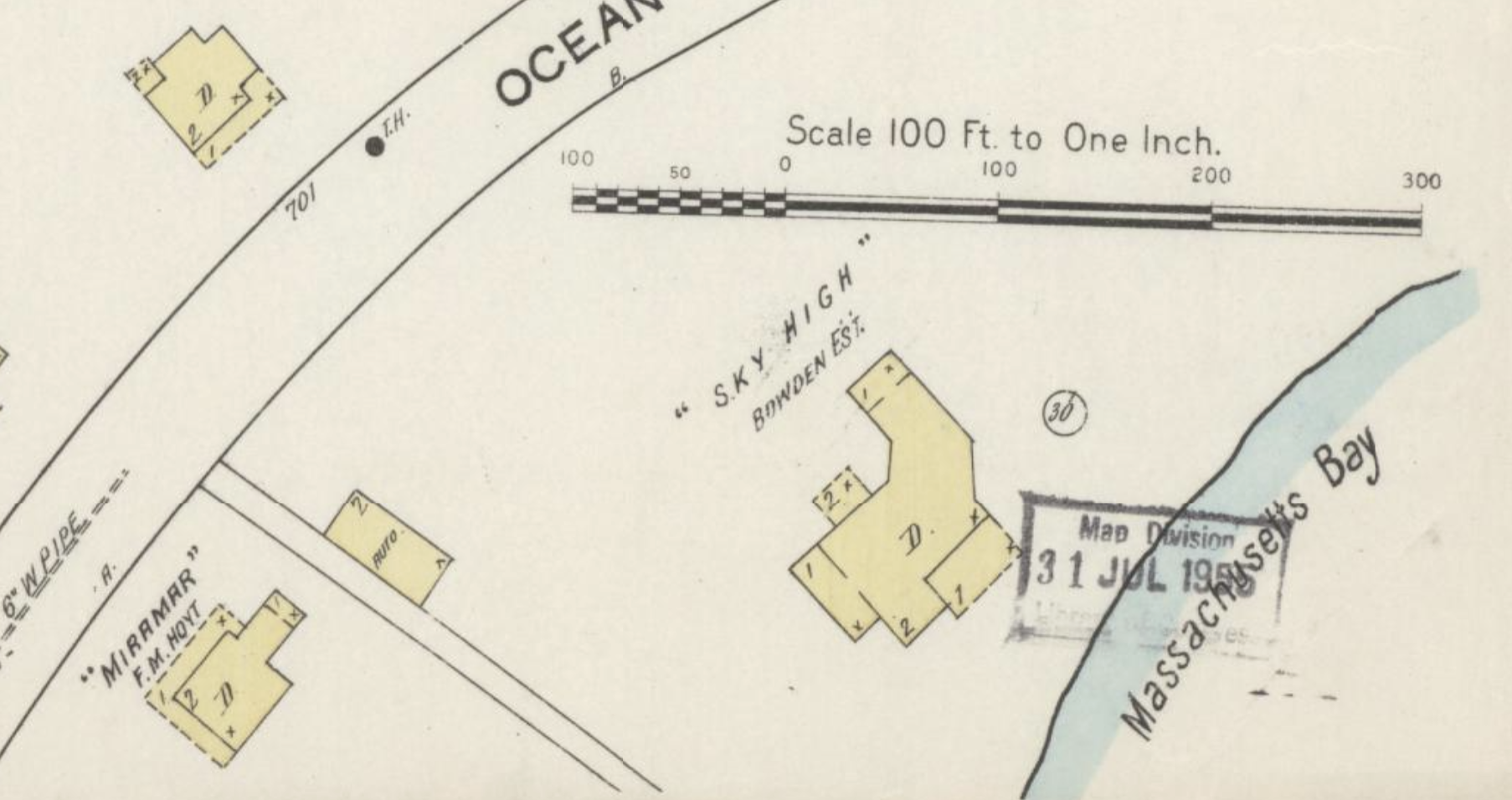
Sanborn Fire Insurance Map from Marblehead, Essex County, Massachusetts. Map. New York: Sanborn Map Company, Jun, 1915. Library of Congress, Geography and Map Division. https://www.loc.gov/item/sanborn03777_006/.
To view the entire Hoyt property, I turned to a 1912 Atlas of Marblehead, which, through its proximity to Sky High, indicated that Mirrmar had stood at 353 Ocean Ave, which was cleared in 1955 to make way for new construction. Yet the spot where Seagard stands today, just above the Hoyt garage, was vacant.
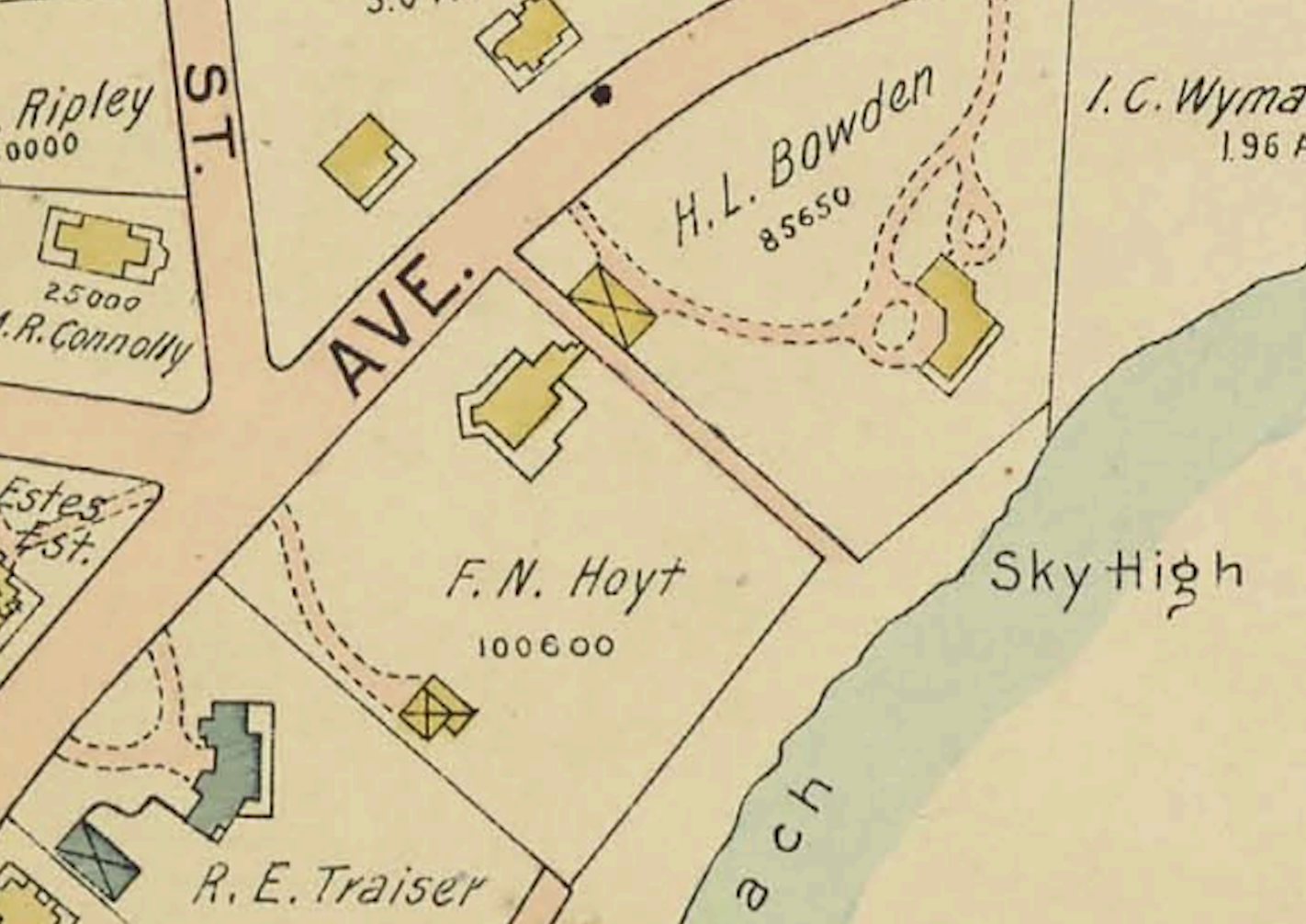
Atlas of Marblehead Massachusetts. Map. Boston: Walker Lithograph & Publishing Co., 1912. State Library of Massachusetts, Real Estate Atlases.
To confirm the home's absence, I next consulted a 1909 panoramic view of Marblehead, the oldest such map to depict structures in the area of interest. It showed two buildings that closely resembled the 1915 Sanborn floor plan for Miramar and its garage, but there was still no indication of Seagard.
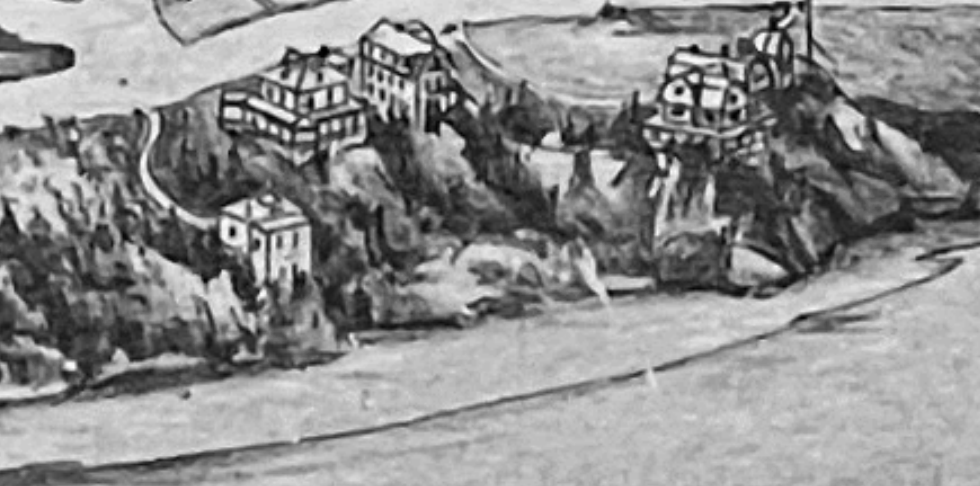
Downs, A. E. Birdseye View of Marblehead. Map. Marblehead: Merrill H. Graves, 1909. Marblehead Historic Commission.
Undaunted, I located a 1923 property plat from Frederick Maxfield Hoyt’s sale of the property to Henry Bradley Plant, an avid yachtsman named for his grandfather, a noted industrialist and Florida real estate developer. Finally, a second dwelling was depicted on the Hoyt property, aligning with the 1962 plan and the modern location of Seagard. This indicates that Frederick Hoyt built a second home on his estate sometime in the 10 years between the 1912 map and this plat. In the first indication of Mirrmar's ties to ocean tragedy, Plant died at age 42 while living full-time on his yacht, the Mascotte, after reselling the estate.
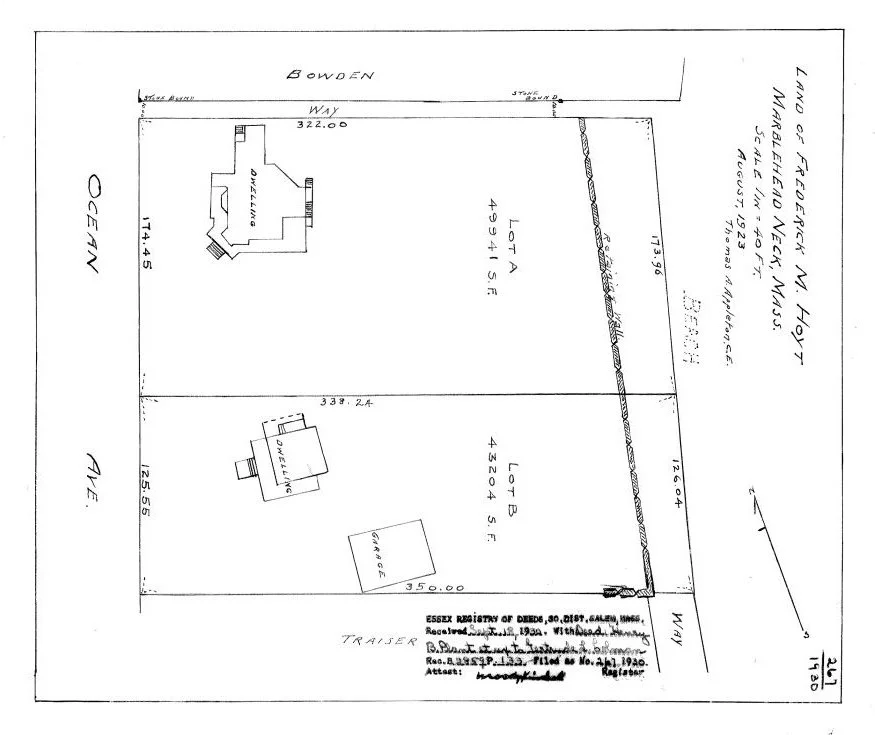
Appleton, Thomas A. Land of Frederick M. Hoyt. Plat. Salem: Essex Registry of Deeds, 1930.
Articles from the early 20th century about Hoyt, who was a naval architect, are abundant. In 1905, he designed the sailing yacht Atlantic for the Kaiser Cup, a race to cross the Atlantic set by Wilhelm II of Germany. As the vessel's navigator, Hoyt won the cup, besting even the Kaiser’s yacht and setting a record for fastest sailed powered crossing of the Atlantic, which was not broken until 1997.
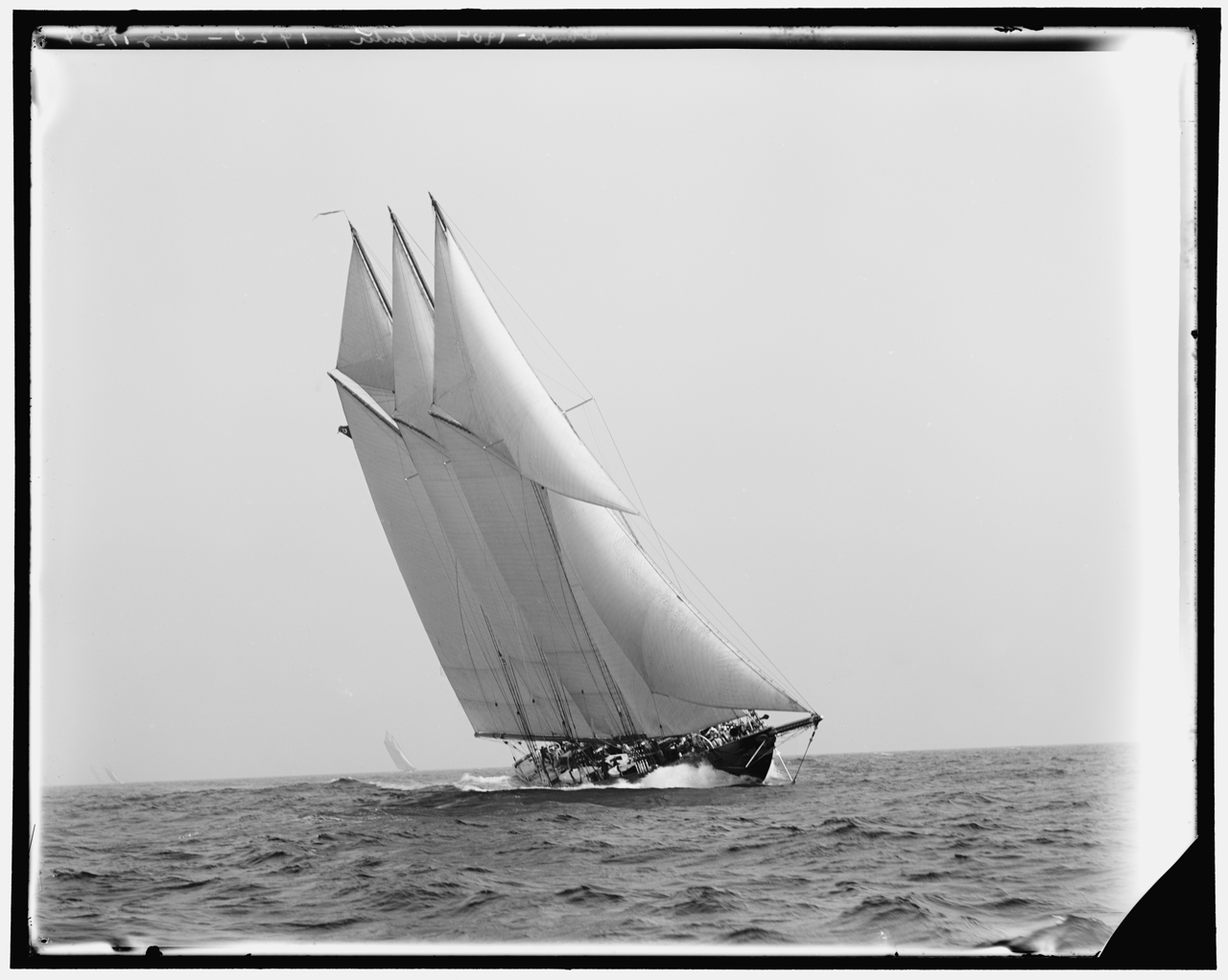
Bolles, Charles Edwin. Atlantic. Photograph. Detroit: Detroit Publishing Co., 1904. Library of Congress, Prints and Photographs Division. https://www.loc.gov/pictures/item/2016797224/
Mr. Hoyt owned three notable yachts: the Norota, the Syce, and the Isolde, the latter of which was later purchased by Vincent Astor. In fact, it was his love of sailing that caused him to purchase Mirrmar from Redfield Proctor Jr., later governor of Vermont. The estate was to be used exclusively for sailing, as Hoyt primarily resided in New York. There, he had a townhouse in the city at 112 East Seventy-Third Street, as well as a country home at 12 Pryer Lane, Larchmont. He also used Blachley Manor, his childhood home in Stamford, Connecticut, as his summer residence. Interestingly, Hoyt’s sister, who resided full-time at neighboring Blachley Lodge, was part of the first graduating class of Vassar College, which I discussed in a previous post.
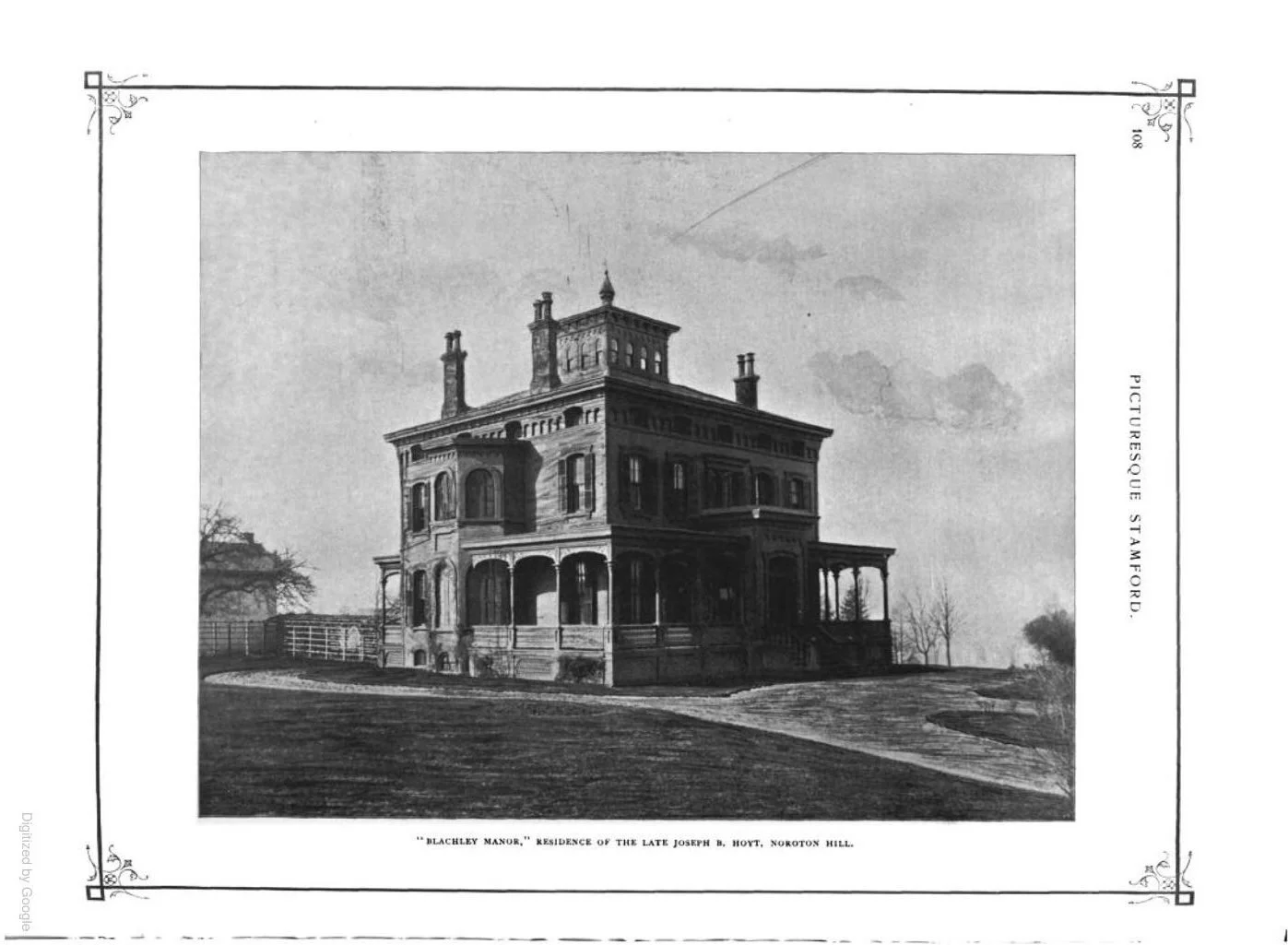
Gillespie, Edward T. W. Blachley Manor. Photograph. Stamford: Gillespie Brothers, 1892. Columbia University.
It was to Blachley Manor that he and his wife, Jane, were heading when they boarded the Titanic for its maiden voyage on April 10, 1912. The couple chose to travel on the ship as Mr. Hoyt was a close friend of Captain Smith, the ship's surgeon, Dr. O'Loughlin, and the Titanic's designer, fellow naval architect Thomas Andrews. All of these men lost their lives in the tragedy. It was Dr. O'Loughlin who personally notified the Hoyts of the impending disaster not long after the ship struck the iceberg. The couple dressed for the frigid temperatures, and after lingering on deck with her husband for quite some time, Mrs. Hoyt was helped into the final boat to be deployed from the ship, collapsible D, by Dr. O'Loughlin. After bidding his wife goodbye, Mr. Hoyt returned to his cabin to shed layers in preparation to swim to safety, and then made his way up to the bridge, where he had a final drink with the captain, a friend of sixteen years. They discussed the dire situation, making Hoyt the last survivor to speak with the commander of the doomed vessel. He then made his way to a lower deck in hopes of spotting a nearby lifeboat; however, with none in sight, he dived into the frigid waters as Alexander's Ragtime Band played. After swimming for 10 minutes, he was pulled, exhausted, into a lifeboat. A woman taking pity on the half-naked man draped him in her furs, at which point the woman, Mrs. Hoyt, with a scream, recognized her husband.

Ogden, Louis M. Collapsible Lifeboat D From Deck of The Carpathia. Photograph. April 15, 1912.
Although the couple was initially reported as lost, with the Larchmont Yacht Club publishing an obituary, their harrowing reunion soon gained notoriety. A distant cousin of Frederick’s, entrepreneur William Fisher Hoyt, was the first man to be pulled from the ocean after the ship vanished under the waves, however he died in the lifeboat. As he was later identified through the contents of his pockets on the Carpathia, William Hoyt was also the first victim of the sinking to legally be declared dead. His estate amounted to between 25,000 and 40,000 dollars, the equivalent of at least several million dollars today. Mrs. Jane Hoyt actually witnessed the rescue but was unable to identify the relation from a distance.
The couple suffered no severe injuries; Jane only contracted a cold from exposure after the sinking, and they did not let the disaster dampen their love of the water. This is evidenced by the construction of Seagard after the voyage, as well as by a society directory of Massachusetts’s North Shore listing the Hoyts as still belonging to Marblehead Neck’s two yacht clubs in 1915.
As previously mentioned, Hoyt sold Mirrmar and Seagard in 1923, likely due to dwindling finances, as his Larchmont estate was later foreclosed in 1930. Not long after the couple moved to Long Beach, California, residing at 2919 E Vista St, Jane Hoyt died there from breast cancer in 1932. Mr. Hoyt returned to Larchmont, living in the Manor Inn until his own death in 1940. Yet Seagard remains a testament to his love for the ocean and his wife, as well as a reminder of their miraculous reunion.
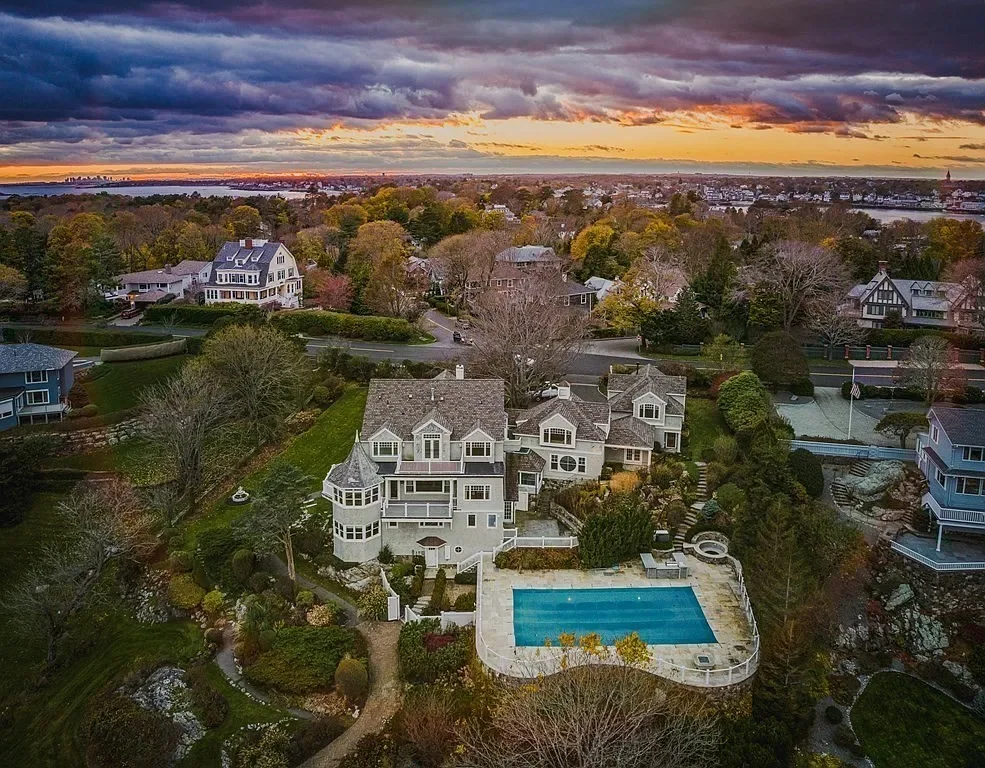
The Proper Nest Real Estate. 349 Ocean Ave Rear Elevation. Marblehead, Massachusetts, 2026.
Although the home was slated for demolition last year in favor of a more contemporary coastal dwelling, the owners thankfully appear to have had a change of heart. The now 5-bedroom, 5.5-bath, 6500-square-foot home is currently listed for 8,750,000 by Proper Nest Real Estate.

Jacob, Walter. Street Elevation of New Home at 349 Ocean Ave. Rendering. Marblehead: Marblehead Zoning Board of Appeals, August, 7th, 2024.
